
Men's Puffer Jackets

-38%

Custom
A Good Person 2023 Chinaza Uche Puffer Jacket
Specification:
-37%

Custom
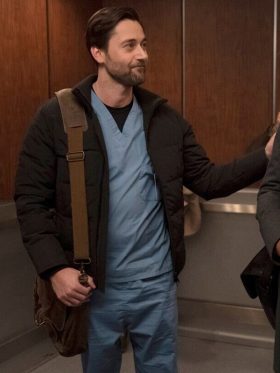
Dr Max Goodwin New Amsterdam Puffer Jacket
Specification:
XS
S
M
L
XL
+3
2XL
3XL
4XL
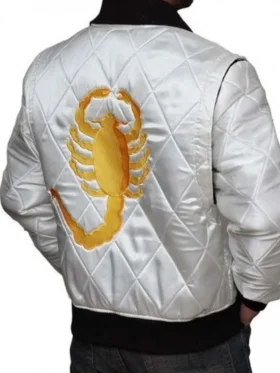
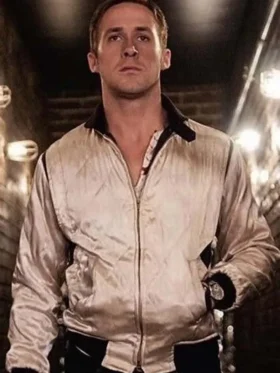
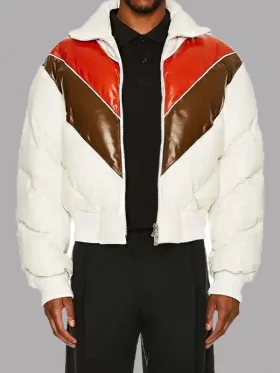
Drive Scorpion Jacket
Seasonal Collections Halloween Costumes Men's Puffer Jackets Celebrity Inspired Outfits Collection Ryan Gosling Outfits
Rated 5.00 out of 5:Product Specification
- Material Architecture: High-Density Premium Ivory Satin
- Internal Layer: Diamond-Quilted Moisture-Wicking Lining
- Collar Structure: Reinforced Rib-Knitted Stand-Up Design
- Graphic Integrity: High-Stitch Count Gold Scorpion Embroidery
- Fastening Detail: Industrial-Grade Front Zipper Closure
- Cuff Engineering: Precision Rib-Knitted Cuffs and Hemline
- Storage: Two Deep Exterior Welt Pockets
- Pigmentation: Reflective Ivory with High Tonal Permanence
- Durability: Dual-Needle Reinforced Seams for Industrial Longevity
XS
S
M
L
XL
+3
2XL
3XL
4XL
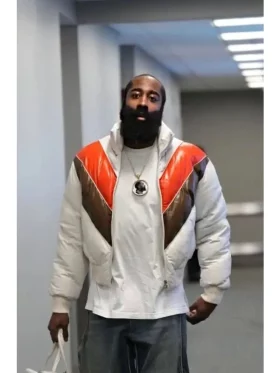
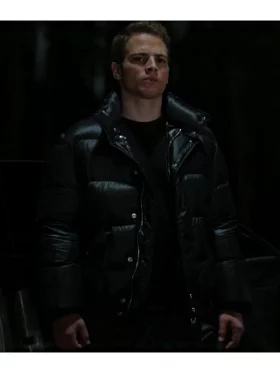
Philadelphia 76ers James Harden Puffer Jacket
Product Specifications:
- Material: Parachute
- Inner: Soft Viscose Lining
- Front: Zipper Style Closure
- Collar: Stand Up Collar
- Cuffs: Rib Knitted Cuffs
- Color: White
-38%
Custom
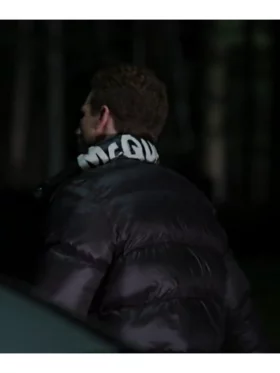
Power Book II Ghost S02 Brayden Weston Black Puffer Jacket
Specification:
- Material: Parachute Fabric
- Inner: Soft Lining
- Closure: Zipper Closure
- Collar: Stand-Up Collar
- Color: Black
-40%
XS
S
M
L
XL
+3
2XL
3XL
4XL
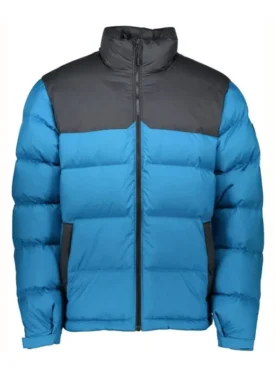
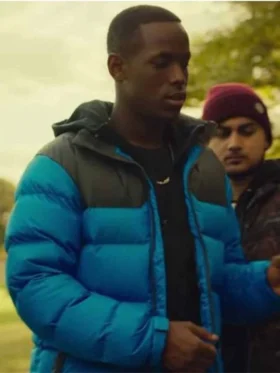
Top Boy Jamie Jacket
Product Specifications:
- External: Polyester
- Inner: Viscose Lining
- Closure: Zippered Closure
- Collar: Stand-Up Style Collar
- Open Hem Cuffs: with Velcro Fastener
- Pockets: Two Slant Waist Pockets Outside, Two Pockets Inside
- Color: Blue with Black Band on Shoulders

-40%
Custom
Welcome to Wrexham Rob McElhenney Black Puffer Jacket
Specification:
- External : Parachute
- Inner: Soft Viscose Lining
- Closure: Zipper Closure
- Collar: Hooded Collar
- Color: Black
-40%

Custom
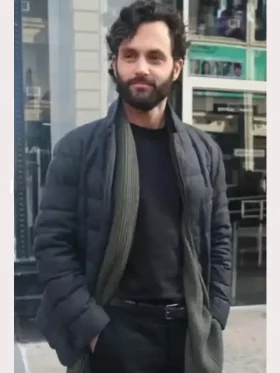
You S04 Penn Badgley Puffer Jacket
Specification:
Frequently Asked Questions
A men's puffer jacket is a cold-weather outerwear essential built around quilted baffles stitched chambers that trap warm air close to the body and retain body heat. The core choice when buying a puffer is between natural goose or duck down, which offers the best warmth-to-weight ratio, and synthetic insulation, which resists moisture and stays warm even when wet. Available in hooded, packable, cropped, leather, and standard silhouettes across a wide range of colorways.
A puffer jacket works through its quilted baffles stitched chambers filled with down or synthetic insulation that trap warm air generated by the wearer's body and hold it close to the skin. The outer shell blocks wind from penetrating, and the DWR coating on most shells repels light moisture. The higher the fill power of the insulation, the more warmth the jacket delivers per ounce of material.
The outer shell of most puffer jackets is 20D to 30D nylon ripstop fabric treated with a DWR water-repellent coating. The fill is either natural down goose or duck measured in fill power, or synthetic polyester insulation. Premium puffer jackets use 700 to 800-plus fill power goose down for maximum warmth-to-weight performance. Leather puffer jackets replace the nylon shell with a genuine leather or vegan leather exterior.
Yes. Down puffer jackets are among the warmest lightweight jackets available. An 800-plus fill power down puffer outperforms most alternatives at equivalent weight, delivering serious cold-weather insulation from around 20 to 40 degrees Fahrenheit depending on construction. Synthetic puffer jackets perform reliably across a similar temperature range, with the added advantage of maintaining most of their warmth when wet.
Most puffer jackets are water-resistant rather than fully waterproof. The DWR coating on the outer shell causes water to bead off in light rain and snow, but sustained heavy rain will eventually saturate the fabric and compress the insulation. For full waterproofing, a hardshell jacket layered over the puffer is the correct approach. Leather puffer jackets provide stronger inherent moisture resistance due to the leather shell.
A puffer jacket is warmer than a leather jacket at equivalent weight. Leather provides real wind resistance and adds meaningful warmth through its dense construction, but down insulation significantly outperforms leather for cold-weather performance. The leather puffer jacket combines both a leather outer shell with puffer insulation inside delivering the warmth of a down or synthetic fill with the windproofing and visual character of genuine leather in a single piece.
Machine wash on a gentle cycle with a mild cleaner designed for down or synthetic insulation never use fabric softener, as it clogs fill clusters and reduces warmth. Tumble dry on low heat with two or three clean tennis balls in the dryer: the tennis balls break up clumped insulation as it dries and restore the jacket's loft. Run two or three full dry cycles until the jacket is completely dry and uniformly puffy. For leather puffer jackets, wipe the shell with a damp soft cloth and apply leather conditioner every few months.
Yes tumble dry on low heat with tennis balls to restore insulation loft. Never use high heat, as it damages down clusters and melts synthetic fill fibres. The drying process takes longer than a standard garment expect two to three full cycles on low heat before the jacket is completely dry and fully lofted again.
Yes. The puffer jacket is one of the most enduringly relevant outerwear pieces across streetwear, sport, and fashion. From the North Face 1996 Retro Nuptse to Moncler's luxury tier to celebrity-worn designs at premieres and sporting events, the puffer jacket occupies every level of the market in 2026. The silhouette moves in and out of specific trends while remaining a permanent fixture in men's cold-weather wardrobes.