
What Is Bonded Leather? Complete Material Guide (Definition, Pros, Cons and Comparisons)

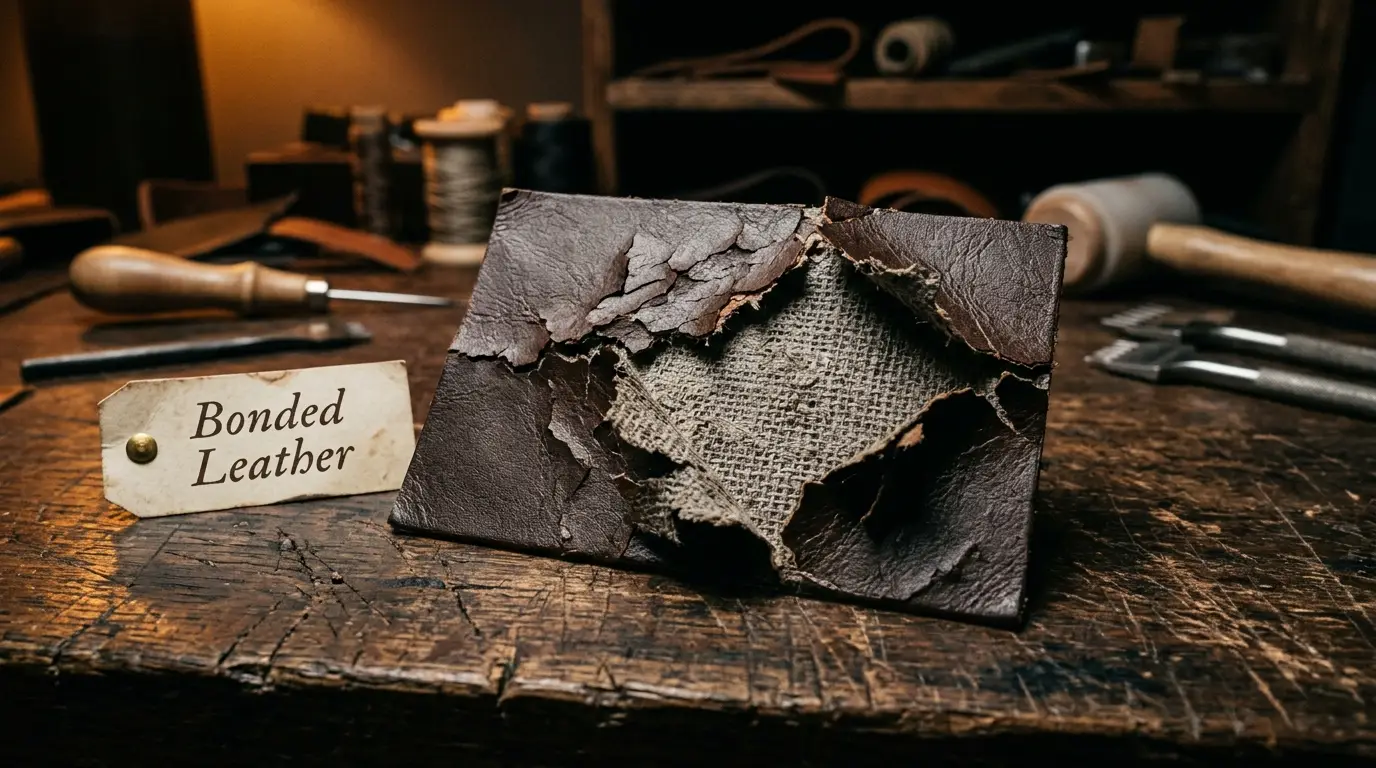
Bonded leather is one of the most misunderstood and misleading materials in the leather goods market. You will find it on sofas, office chairs, Bible covers, wallets, belts, and even jackets often marketed with words like genuine, LeatherSoft, or reconstituted that make it sound more premium than it actually is. This guide explains exactly what bonded leather is, how it is manufactured, how it compares to real leather and synthetic alternatives, how to identify it before you buy, and when you should avoid it entirely.
What Is Bonded Leather? The 20-Second Definition
Bonded leather is a manufactured material made from shredded leather scraps and fibers mixed with a polyurethane or latex binder, rolled onto a fabric or paper backing, and embossed with a leather-like grain texture it typically contains only 10% to 20% actual leather content.
Bonded leather, also called reconstituted leather, composite leather, blended leather, or LeatherSoft, is the lowest grade of any material that can legally carry the word leather on a product label in most markets. The remaining 80% to 90% of the material is polyurethane binder and synthetic backing, meaning it behaves far more like a synthetic material than any grade of genuine leather. It was developed as a way to recycle leather industry offcuts and scraps into a low-cost upholstery and accessory material, and it is now widely used across budget furniture, fashion accessories, and bookbinding.
Understanding what is leather made of at a structural level is essential context for understanding why bonded leather performs so differently from every grade of genuine leather above it.
What Is Bonded Leather Made Of? Manufacturing Process Explained
Bonded leather is produced through a four-step industrial manufacturing process that begins with leather industry waste and ends with an embossed sheet material that visually resembles genuine leather. Each step determines how the final material performs and why it fails the way it does.
Step 1: Sourcing Leather Scraps and Fibers
The raw material input for bonded leather is leather scraps and leather fibers the offcuts, trimmings, shavings, and factory waste generated during the production of full-grain and top-grain leather goods. These scraps come from the processing of animal hide and are collected from tanneries and leather manufacturing facilities. They are shredded and ground into a fine pulp or fiber material. These leather fibers typically make up only 10% to 20% of the final bonded leather product by dry weight.
Step 2: Mixing with Polyurethane or Latex Binder
The shredded leather fiber pulp is mixed with a binder to hold it together. The primary binder used is polyurethane, a thermoplastic synthetic polymer that makes up the majority of the finished material approximately 80% to 90% of total composition. Some manufacturers use a latex binder, a natural rubber-based adhesive, as an alternative to polyurethane. The binder is what gives the material its body, but it is also the primary source of its failure: as the polyurethane ages and degrades, it separates from the leather fiber base and causes the surface to peel and flake.
Step 3: Rolling onto Paper or Fiber Backing
The blended mixture of leather fiber pulp and binder is rolled out flat and pressed onto a paper or fiber backing sheet. This backing substrate provides structural support and gives the material its consistent thickness. Without the backing, the bonded leather composite would lack the body needed to function as an upholstery or accessory material. The result at this stage is a flat, uniform sheet with no surface texture or appearance resembling leather.
Step 4: Embossing the Leather Grain Texture
The final step is embossing, in which a textured roller or press stamps a grain pattern onto the surface of the bonded sheet to mimic the appearance of genuine leather. A polyurethane synthetic coating is then applied over the surface to seal it, add color, and create the smooth, uniform finish visible on the finished product. This embossed grain is entirely artificial unlike full-grain leather where the grain pattern is the natural surface of the animal hide. Salamander Industrieprodukte, based in Türkheim, Bavaria, is the oldest and largest manufacturer of bonded leather fiber material in the world and is credited in industry literature as a pioneer of the modern bonded leather manufacturing process.
Bonded Leather vs. Genuine Leather: Key Differences
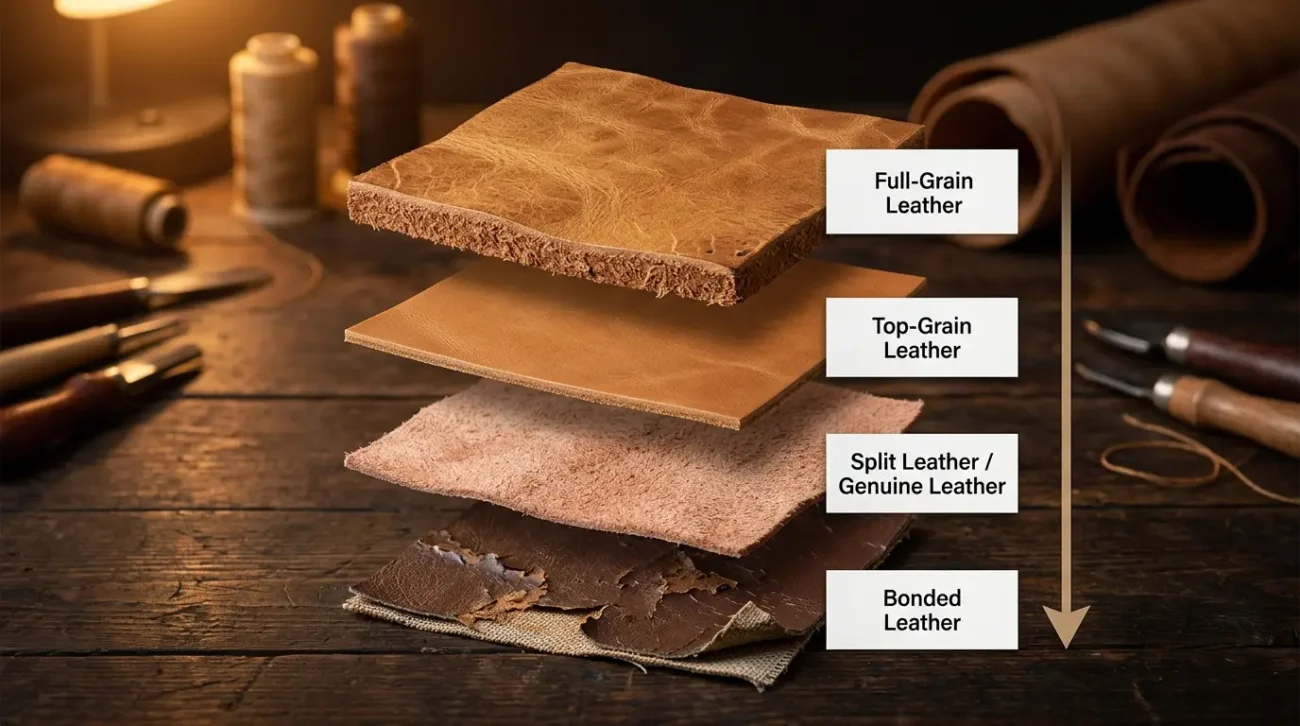
The leather grading scale from highest to lowest quality: full-grain, top-grain, split leather, and bonded leather at the bottom
Genuine leather, unlike bonded leather, is made entirely from real animal hide and depending on which layer is used, it is classified as full-grain, top-grain, or split leather, each significantly more durable and longer-lasting than any bonded leather product. Understanding the leather grading scale makes the quality gap between bonded and real leather immediately clear.
The leather grading hierarchy from highest to lowest quality is: Full-Grain Leather, Top-Grain Leather, Split Leather (also called Genuine Leather on labels), and Bonded Leather. Bonded leather sits at the bottom of this scale and is the only grade in the hierarchy that is partially synthetic.
Full-Grain Leather vs. Bonded Leather
Full-grain leather, the highest grade of genuine leather, is made from the complete outer layer of the animal hide without sanding or buffing, preserving all natural markings, blemishes, and the dense fiber structure that gives leather its strength. Full-grain leather develops a natural patina over time a gradual softening, darkening, and character development that makes the material more beautiful and distinctive with age. Bonded leather is physically incapable of developing natural patina. Instead of improving with age, bonded leather deteriorates: the polyurethane surface begins to crack and peel while full-grain leather is still deepening in character.
Top-Grain Leather vs. Bonded Leather
Top-grain leather is made from the outer layer of the hide but with the surface sanded or buffed to remove natural blemishes, producing a more uniform appearance. It is thinner and more pliable than full-grain leather but significantly more durable than bonded leather. Top-grain leather is the most common grade used in quality fashion leather jackets and mid-range leather goods. It does not develop as rich a patina as full-grain leather, but it lasts many years with basic care and does not peel or flake the way bonded leather does.
Split Leather vs. Bonded Leather
Split leather, often labelled as genuine leather on consumer products, is made from the lower layers of the hide left after the top-grain layer has been removed. It is the lowest grade of real leather and is softer but less durable than top-grain. Despite being the weakest real leather grade, split leather still outperforms bonded leather in longevity and structural integrity because it is 100% animal hide rather than a composite of leather scraps and synthetic binder. Genuine leather products will still wear rather than peel, while bonded leather products flake and delaminate as the binder fails.
| Attribute | Full-Grain Leather | Top-Grain Leather | Split/Genuine Leather | Bonded Leather |
|---|---|---|---|---|
| Real Leather Content | 100% | 100% | 100% | 10–20% |
| Durability | Highest | High | Moderate | Very Low |
| Lifespan | 20–30+ years | 10–20 years | 5–10 years | 2–5 years |
| Develops Patina | Yes — richly | Mildly | Minimally | No |
| Peels or Flakes | No | No | No | Yes — within years |
| Price Range | Premium | Mid to Premium | Budget to Mid | Budget |
| Best Use | Jackets, bags, luxury goods | Fashion jackets, accessories | Budget fashion goods | Decorative use only |
Bonded Leather vs. PU Leather, Faux Leather and Leatherette
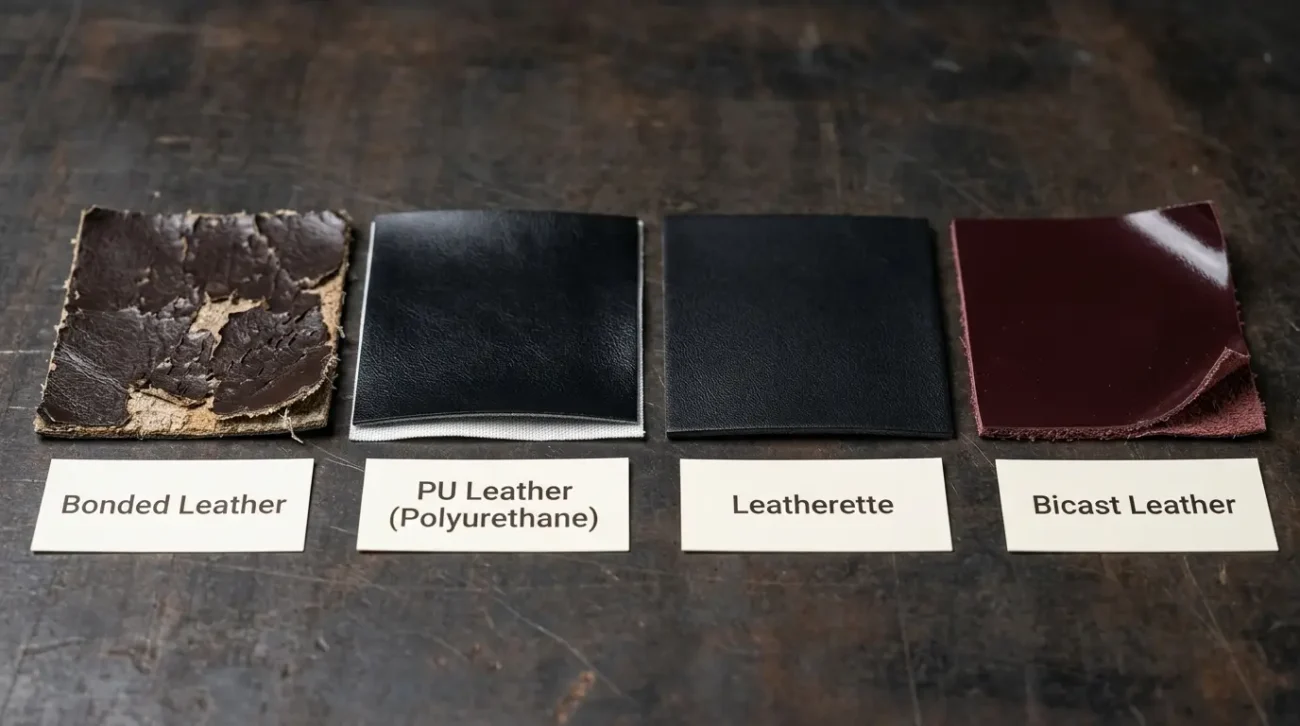
Bonded leather, PU leather, leatherette, and bicast leather side by side four synthetic alternatives with very different durability and performance levels
Faux leather is the broad category of synthetic materials designed to look like real leather, including PU leather, vinyl leather, leatherette, and bonded leather. Despite both being marketed as affordable leather alternatives, bonded leather and the fully synthetic faux leather materials perform very differently and are not equivalent products.
Bonded Leather vs. PU Leather
PU leather, or polyurethane leather, is a 100% synthetic material made without any animal content, making it a vegan alternative to both genuine and bonded leather. PU leather is manufactured by coating a fabric base with a flexible polyurethane polymer layer. Unlike bonded leather, PU leather contains no leather fiber scraps, which means it has a fully consistent internal structure with no weak bonding points that can separate under stress. PU leather is more durable than bonded leather, more water resistant, and more consistent in appearance and performance over time. For a complete guide to polyurethane leather, read what is PU leather at TV Jackets.
Bonded Leather vs. Faux Leather and Leatherette
Leatherette is an artificial leather made by covering a fabric base with a layer of PVC or polyurethane plastic it contains no animal hide whatsoever. Like PU leather, leatherette has a fully uniform synthetic structure without the inconsistent leather fiber bonding that causes bonded leather to fail prematurely. Leatherette is more water resistant and easier to wipe clean than bonded leather, and it generally maintains its surface integrity longer. The category of faux leather also includes vegan leather alternatives such as plant-based and lab-grown materials. For a full breakdown of these alternatives, read what is faux leather at TV Jackets.
Bonded Leather vs. Bicast Leather
Bicast leather is a type of PU leather made by bonding split leather the lowest usable layer of real hide with a polyurethane coating on the surface. Bicast leather is different from bonded leather in its manufacturing process: bicast uses an intact split leather layer as its base rather than shredded scraps, which gives it slightly more structural consistency. However, bicast leather is still prone to peeling at the PU coating layer and is generally considered a low-grade material not suitable for high-use products. Both bicast and bonded leather sit below all grades of genuine leather in quality and durability.
| Attribute | Bonded Leather | PU Leather | Leatherette | Bicast Leather |
|---|---|---|---|---|
| Real Leather Content | 10–20% | 0% | 0% | Split layer base |
| Vegan | No | Yes | Yes | No |
| Durability | Very Low | Moderate | Moderate | Low |
| Lifespan | 2–5 years | 5–10 years | 5–10 years | 3–7 years |
| Peels or Flakes | Yes | Less likely | Less likely | Yes — at PU layer |
| Water Resistance | Low | High | High | Moderate |
| Price | Budget | Budget to Mid | Budget | Budget to Mid |
Pros and Cons of Bonded Leather: An Honest Assessment
Bonded leather is not without its advantages for specific use cases. The honest assessment requires acknowledging both what it does adequately and where it fails significantly.
Advantages of Bonded Leather
- Affordability: Bonded leather is significantly cheaper to produce than any grade of genuine leather, making it the most accessible price point for leather-look products in furniture, accessories, and fashion.
- Uniform appearance: Because the surface is embossed rather than natural, bonded leather has a consistent, blemish-free appearance that some buyers prefer over the natural variation of full-grain leather.
- Easy to clean: The polyurethane surface coating makes bonded leather relatively easy to wipe clean with a damp cloth, which is why it is used in budget office chairs and casual furniture.
- Uses leather industry waste: From a materials perspective, bonded leather does recycle leather scraps that would otherwise be discarded, which some position as a sustainability benefit though this is contested given the polyurethane content.
Disadvantages of Bonded Leather
- Short lifespan of 2 to 5 years: Bonded leather typically begins to peel, crack, and flake within 2 to 5 years of regular use because the polyurethane binding material separates from the leather fiber base a failure process that cannot be reversed or repaired once it begins.
- Peeling and flaking: This is the defining failure mode of bonded leather. As the PU binder ages and the bond between the synthetic coating and the fiber base weakens, the surface separates in sheets or flakes. This cannot be conditioned or treated back to its original state.
- Cannot develop natural patina: Natural patina is the gradual softening, darkening, and character development that genuine leather develops through regular use and exposure a quality bonded leather is physically incapable of replicating. Where genuine leather becomes more beautiful with age, bonded leather becomes more degraded.
- Chemical off-gassing: Chemical off-gassing refers to the release of chemical compounds into the air as the polyurethane binder in bonded leather degrades over time. This is a health and environmental concern that distinguishes bonded leather from genuine leather in long-term indoor use.
- Not repairable: Once bonded leather begins to peel, no conditioning product, leather repair kit, or maintenance routine can restore the structural bond between the synthetic coating and the fiber base. The only option is replacement.
- Misleading marketing: The use of the word leather in bonded leather, combined with marketing terms like LeatherSoft, reconstituted, and composite, regularly misleads buyers into believing they are purchasing a genuine leather product.
What Is Bonded Leather Used For? Common Applications
Bonded leather appears across a wide range of product categories, primarily in applications where low cost and leather-like appearance are prioritized over durability and longevity.
Bonded Leather Furniture: Sofas, Chairs and Office Chairs
Furniture upholstery is the dominant application for bonded leather. Budget sofas, dining chairs, office chairs, and headboards are frequently upholstered in bonded leather because it provides a leather-like aesthetic at a fraction of the cost of genuine leather. The problem is that furniture surfaces endure constant friction, body heat, and weight pressure exactly the conditions that accelerate the peeling and flaking failure mode. A bonded leather sofa purchased at a budget price point is likely to begin showing surface deterioration within 2 to 3 years of regular daily use, which is far below the lifespan expectation most buyers have when purchasing what they believe to be a leather sofa.
Bonded Leather Bible and Book Covers
Bible covers, journals, diaries, and bookbinding represent one of the most consistent and widespread applications for bonded leather. The bookbinding tradition has long used leather for premium covers, and bonded leather provides a low-cost alternative that carries the same visual weight and tactile impression as leather-bound books. Because books and journals typically receive less friction and pressure than furniture upholstery, bonded leather performs somewhat better in this application. It remains, however, susceptible to peeling at the spine and corners where flexing occurs repeatedly.
Bonded Leather Fashion Accessories: Bags, Belts and Wallets
Handbags, belts, wallets, luggage bags, and shoe components are all produced using bonded leather at the budget end of the fashion accessories market. In these applications the material is subject to significant daily handling, friction, and stress at seams and fold points conditions that accelerate the peeling failure. A bonded leather belt or wallet will begin to show edge peeling and surface cracking within one to two years of regular use, far short of what a genuine leather equivalent would deliver.
Bonded Leather Jackets: What Buyers Should Know
Bonded leather jackets are produced at the very low end of the outerwear market. A leather jacket is a high-contact, high-movement garment that experiences constant flexing at the elbows, shoulders, and back exactly the stress patterns that cause bonded leather’s PU binder to separate and peel fastest. Any leather jacket with a price that seems unusually low should be examined carefully for the bonded leather label. At TV Jackets, every jacket in the men’s leather jackets and women’s leather jackets collections is built from genuine leather grades not bonded leather composites because a jacket that peels within two years is not a jacket worth buying.
How to Tell If Something Is Bonded Leather
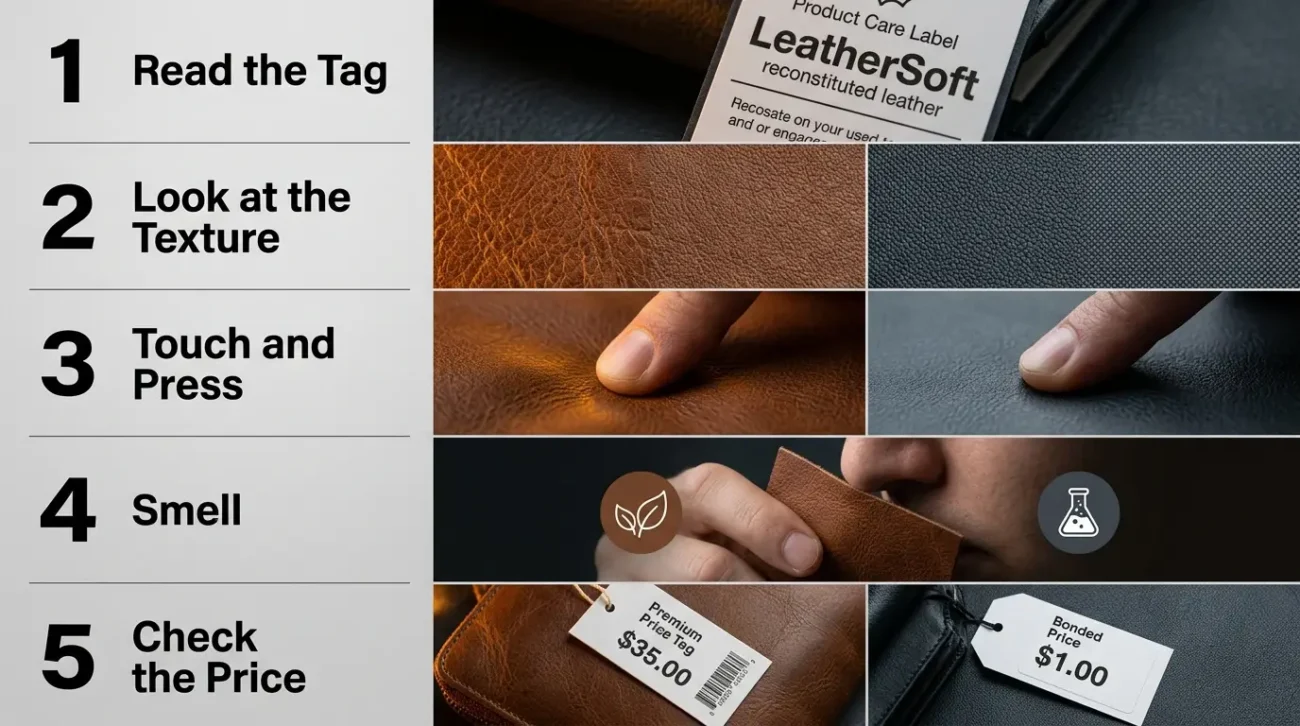
Read the tag, check the grain, press the surface, smell for chemicals, and check the price five reliable ways to identify bonded leather before buying
The most reliable way to identify bonded leather is to read the manufacturer’s tag if it uses vague terms like bonded leather, LeatherSoft, reconstituted, composite, or simply says nothing about leather content, the material is almost certainly not genuine leather. Here are five methods to identify bonded leather before purchasing.
1. Read the Tag or Label
Check the manufacturer’s tag or product label first. Genuine leather products will typically state the leather grade: full-grain leather, top-grain leather, or genuine leather. Bonded leather products often use alternative labelling terms including LeatherSoft, reconstituted leather, composite leather, blended leather, or vinyl leather. If the tag uses any of these terms, or if it says bonded leather explicitly, the product is not genuine leather. The Mission Mercantile genuine leather vs bonded leather guide provides a useful reference for reading leather labels accurately.
2. Look at the Texture and Surface Pattern
Genuine leather has a naturally irregular grain pattern. No two areas of a real leather hide are identical the grain varies in depth, direction, and texture across the surface. Bonded leather has a perfectly uniform, repeated grain pattern across the entire surface because it is embossed mechanically. If the grain pattern repeats identically across the surface of a product, or if it looks too perfect and plastic-smooth, the material is almost certainly bonded leather or another synthetic.
3. Touch and Press the Surface
Press a fingertip firmly into the surface and release. Real leather will warm slightly from body heat, compress naturally under pressure, and spring back with a slight recovery that shows the fiber structure beneath. Bonded leather feels harder, more plastic-like, and does not warm or compress in the same way. The edges and back of a genuine leather piece will show fibrous texture and natural colour variation. Bonded leather edges often show a clean, laminated cross-section that reveals the backing material. The BTOD bonded leather identification guide provides detailed touch and visual tests with comparison examples.
4. Smell Chemical Odor vs. Natural Leather Scent
Real leather has a distinctive, organic, slightly animal smell that comes from the tanning process and the natural collagen structure of the hide. This smell is difficult to replicate synthetically and is immediately recognizable to anyone who has handled genuine leather regularly. Bonded leather and other synthetic materials smell of chemicals or plastic, particularly when new, because the polyurethane binder and synthetic coating are the dominant surface materials. If a product smells like plastic wrap or chemical spray rather than organic leather, it is very likely bonded leather or a fully synthetic alternative.
5. Check the Price
Genuine leather commands a price premium at every grade because it is a natural material that requires significant processing. If a sofa, jacket, or bag is priced dramatically below what comparable genuine leather products cost, the material is almost certainly bonded leather or synthetic. The Forbes and Lewis bonded leather guide notes that the price differential between genuine and bonded leather products is one of the most reliable pre-purchase signals available to buyers.
Is Bonded Leather Good? Buying Recommendations
The honest answer is that bonded leather is acceptable in a narrow set of circumstances and should be avoided in most purchasing decisions where durability and longevity matter.
When Bonded Leather Is Acceptable
Bonded leather is acceptable for low-frequency decorative use, short-term budget purchases, and applications where the material will not be subjected to regular friction or flexing. A bonded leather journal or diary used occasionally, a decorative Bible cover that is handled gently, or a budget accessory purchased with the expectation of short-term use are all reasonable applications. If your budget strictly limits your options and you understand the trade-offs, bonded leather can serve a purpose in the short term.
When to Avoid Bonded Leather
Avoid bonded leather for any purchase where you expect the item to last more than three years, for any high-contact or high-movement application including jackets, frequently used furniture, daily-use bags, or belts, and for any purchase where you are investing meaningful money. The peeling and flaking failure is not a question of if it is a question of when. Bonded leather will deteriorate, and it cannot be repaired once the process begins.
What to Buy Instead of Bonded Leather
For furniture, choose top-grain leather or a quality PU leather sofa over bonded leather the price difference is often smaller than expected and the lifespan difference is enormous. For leather jackets and bags, full-grain leather or top-grain leather are the correct choices for any purchase you expect to own for more than a few years. If vegan materials are your priority, a quality PU leather is more durable and consistent than bonded leather. For belts and wallets, genuine leather at the split leather grade will still outlast bonded leather significantly.
Bonded Leather Labeling: What the Tag Really Means
The labeling of bonded leather products is one of the most contested areas of consumer protection in the leather goods industry. Because the word leather appears in the name, many buyers assume bonded leather is a type of genuine leather which it is not in any meaningful sense given its 10% to 20% actual leather content.
The US Federal Trade Commission (FTC), the federal consumer protection agency, recommends that any product containing bonded leather include a clear disclosure of the actual percentage of leather content, as the marketing term bonded leather can otherwise mislead consumers into believing they are purchasing genuine leather. The FTC’s guidance applies to advertising and labeling of leather goods sold in the United States, though enforcement is inconsistent and many bonded leather products reach consumers without any percentage disclosure.
At the international level, the European standard EN 15987:2011, published by the European Committee for Standardization, defines bonded leather as requiring a minimum of 50% leather content by dry weight to carry the bonded leather label. This means a product sold as bonded leather in Europe must contain at least 50% genuine leather fiber a significantly higher threshold than what many products sold under the bonded leather name actually contain. Products with less than 50% leather fiber content must be labelled differently under this standard.
Marketing terms to be aware of when reading product tags include: LeatherSoft, reconstituted leather, composite leather, blended leather, vinyl leather, and leatheraire. All of these terms may refer to bonded leather or similar composite materials. If a product tag does not explicitly state full-grain leather, top-grain leather, or genuine leather, assume the material is not genuine leather until confirmed otherwise.
Final Verdict: Should You Buy Bonded Leather?
Bonded leather is a material that looks like leather, carries the word leather on its label, and costs a fraction of what genuine leather costs but it is not leather in any meaningful sense of the word. It contains 10% to 20% actual leather content, fails through peeling and flaking within 2 to 5 years, cannot develop natural patina, and may release chemicals as it degrades. For any purchase where durability, longevity, and quality matter, full-grain leather, top-grain leather, or a quality PU leather are all significantly better choices. Understanding what bonded leather is and how it performs is the most important step you can take to avoid a purchase you will regret within a few years of making it.
