
Spiderman Jackets: Complete Guide to Every Film, Game and Era

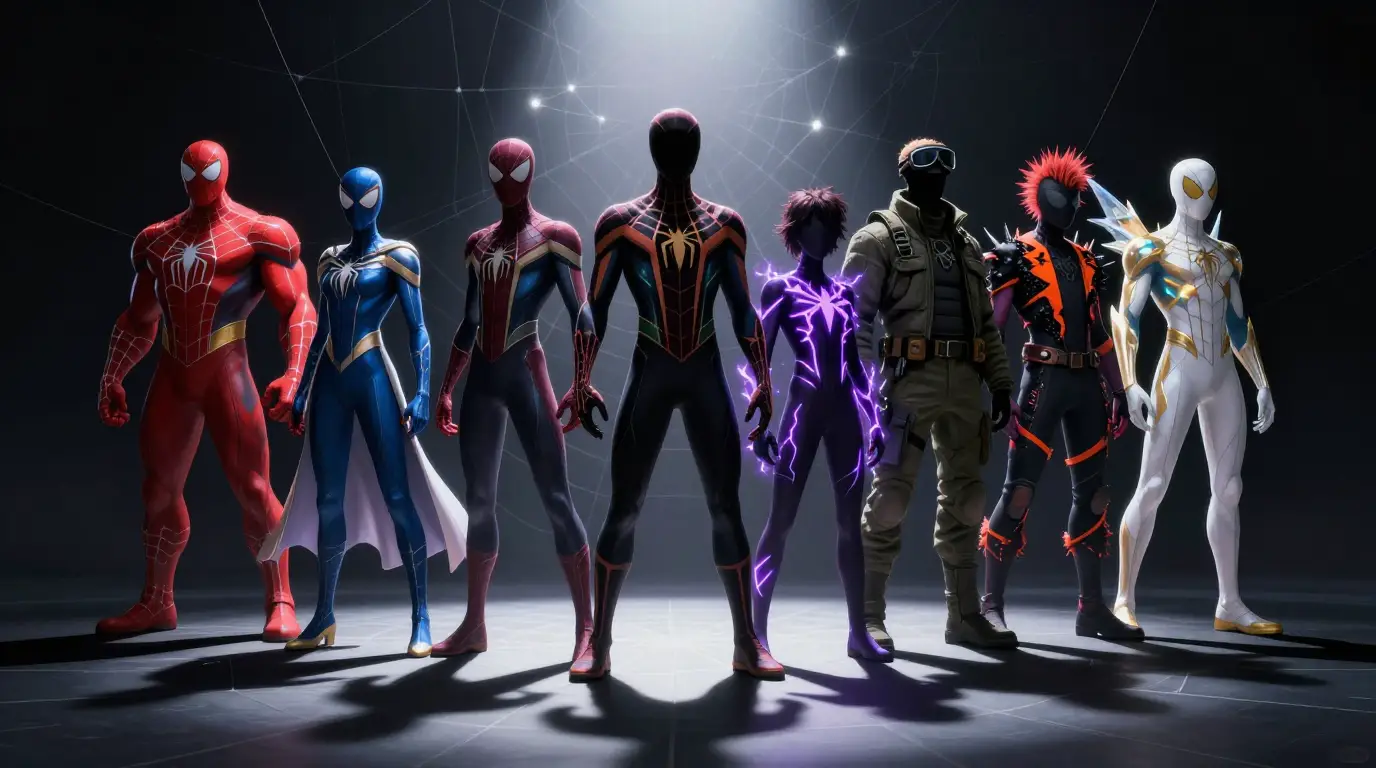
Spider-Man jackets are screen-inspired outerwear pieces based on the costumes, civilian clothes, and character wardrobe of Spider-Man across the Marvel Comics franchise, the Sam Raimi trilogy (2002-2007), the MCU trilogy (2017-2021), the Spider-Verse animated films (2018-2023), and the Insomniac Games PlayStation universe. This is the complete guide to every Spider-Man jacket across every film era, every game, every character, and every collaboration with every piece available to buy made to order at TV Jackets.
Spider-Man: The Origin Story and the Jacket Legacy
Spider-Man was created by writer-editor Stan Lee and artist Steve Ditko for Marvel Comics. The character first appeared in Amazing Fantasy issue 15, published in August 1962, during the Silver Age of Comic Books. Stan Lee conceived the character in response to the commercial success of the Fantastic Four, wanting a teenage superhero whose alter ego dealt with the everyday problems of adolescence alongside crime-fighting responsibilities. The result was Peter Benjamin Parker, a science-focused student from Forest Hills, Queens, New York, raised by his Aunt May and Uncle Ben.
Parker is bitten by a radioactive spider during a school science exhibit, gaining superhuman strength, speed, agility, the ability to cling to any surface, and a precognitive spider-sense. He also develops wrist-mounted web-shooters of his own design. In the defining moment of his origin, Parker fails to stop a fleeing burglar who later kills Uncle Ben. That event establishes the moral foundation of the entire character: with great power comes great responsibility.
In 2011, writer Brian Michael Bendis and artist Sara Pichelli introduced Miles Morales in Ultimate Fallout issue 4 a second Spider-Man from Brooklyn whose moral code anchors every other version of the character. Miles Morales is an Afro-Latino teenager who inherits the Spider-Man mantle after the death of that universe’s Peter Parker, bringing bio-electric powers and a generational perspective that has made him the most culturally significant superhero addition of the 2010s.
No superhero franchise has produced a more diverse or commercially significant jacket culture than Spider-Man. Unlike other superhero characters whose fashion identity is limited to the costume itself, both Peter Parker and Miles Morales have distinct, extensively documented civilian wardrobes that translate directly into real daily-wear outerwear. Explore the full range of Spider-Man jackets at TV Jackets.
Sam Raimi Trilogy Jackets (2002-2007)
Directed by Sam Raimi and starring Tobey Maguire as Peter Parker and Kirsten Dunst as Mary Jane Watson, the Raimi trilogy established the visual and tonal template for superhero cinema in the 2000s. Spider-Man (2002) featured Willem Dafoe as Norman Osborn and the Green Goblin, grossed over 821 million dollars worldwide on a budget of approximately 139 million dollars, and cemented the red and blue suit as the definitive Spider-Man look for an entire generation.
Spider-Man 2 (2004) is widely considered the finest film in the Raimi trilogy. Alfred Molina plays Dr. Otto Octavius and the film won the Academy Award for Best Visual Effects. The train sequence in which a maskless Peter Parker is recognised and protected by New York commuters remains one of the most celebrated moments in superhero cinema history.
Spider-Man 3 (2007) introduced the black symbiote suit the most consequential costume development in Spider-Man history, leading directly to the creation of Venom in Amazing Spider-Man issue 300 (1988). The black symbiote suit first appeared in Secret Wars (1984) and its cultural reach has extended across every subsequent Spider-Man media adaptation. The classic red and blue Spider-Man suit is available in everyday wearable jacket form through the Spider-Man Lotus Peter Parker design. The black symbiote aesthetic is captured in the Spider-Man Black Hoodie with White Spider Graphic and the Back in Black Varsity Jacket.
Shop Spider-Man Lotus Red Blue Jacket
Shop Back in Black Varsity Jacket
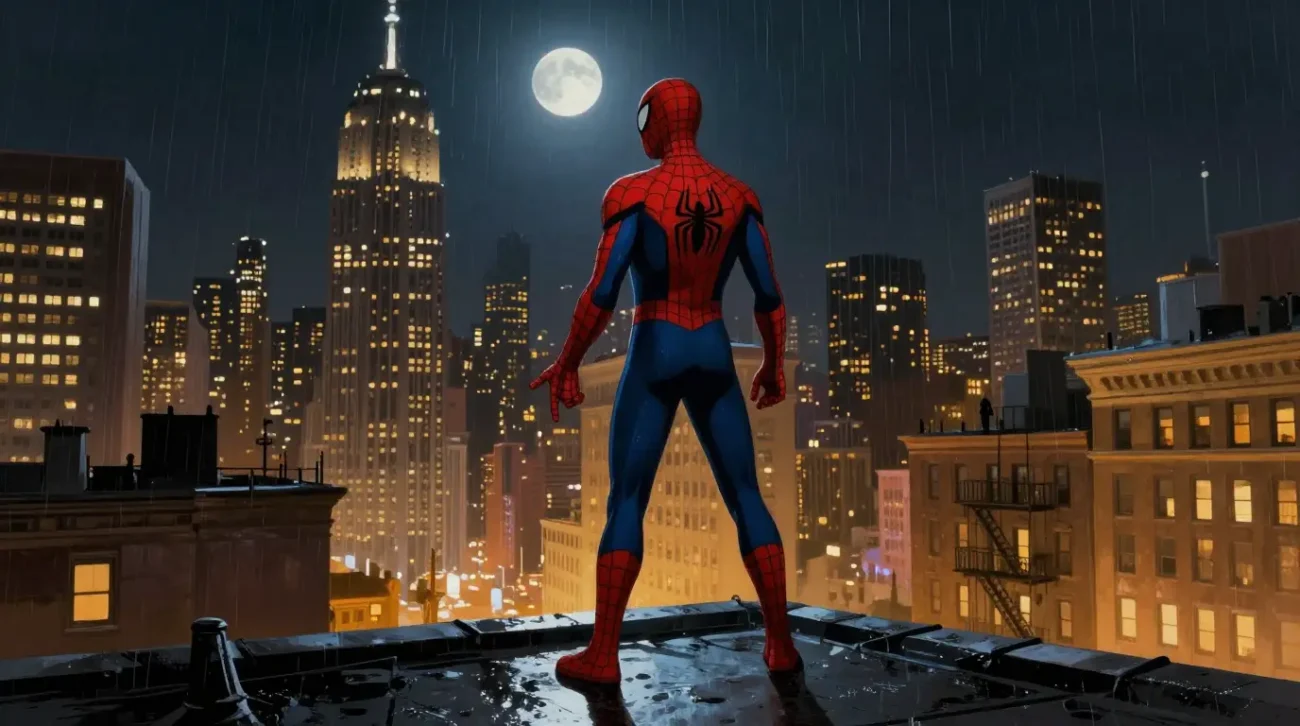
The Sam Raimi trilogy 2002 to 2007: the classic red and blue suit that defined superhero cinema at TV Jackets
The Amazing Spider-Man Era Jackets (2012-2014)
Directed by Marc Webb, The Amazing Spider-Man (2012) starred Andrew Garfield as Peter Parker and Emma Stone as Gwen Stacy. The reboot took a darker, more grounded approach and restored the mechanical web-shooters closer to the comic book version. The Amazing Spider-Man 2 (2014) featured Jamie Foxx as Electro and Dane DeHaan as Harry Osborn, and is most remembered for the death of Gwen Stacy one of the most significant character deaths in the film universe.
Gwen Stacy’s Pink Jacket
The pink jacket worn by Emma Stone as Gwen Stacy in The Amazing Spider-Man 2 became one of the most recognised fashion moments in the entire Spider-Man franchise. The jacket was later reinterpreted as Ghost-Spider’s civilian look in Spider-Man: Across the Spider-Verse (2023), where Hailee Steinfeld voices Gwen Stacy across the multiverse. The Gwen Stacy pink jacket is the most recognisable Spider-Man jacket for women buyers in the collection.
For other Andrew Garfield Amazing Spider-Man era pieces not currently in the standard collection, the TV Jackets custom builder accepts commission orders for screen-accurate builds from the Amazing Spider-Man films.
MCU Spider-Man Jackets (2017-2021)
Tom Holland made his debut as Peter Parker in Captain America: Civil War (2016) before his first solo Spider-Man film. The MCU trilogy Homecoming (2017), Far From Home (2019), and No Way Home (2021) produced the most commercially documented civilian Spider-Man wardrobe in live-action film history.
Spider-Man Homecoming Jackets (2017)
Spider-Man: Homecoming, directed by Jon Watts, introduced Peter Parker as a Queens high school student navigating teenage life alongside superheroics. Michael Keaton plays Adrian Toomes, the Vulture, in one of the MCU’s most well-received villain performances. The film introduced two defining jacket pieces: the yellow school jacket worn by Peter Parker in his civilian life the lightest and most wearable piece in the entire collection and the Vulture’s heavy leather antagonist jacket that carries the full cinematic weight of the Homecoming universe.
Shop Homecoming Vulture Leather Jacket
Spider-Man Far From Home Jackets (2019)
Spider-Man: Far From Home took Peter Parker to Europe following the events of Avengers: Endgame. Jake Gyllenhaal plays Mysterio. The Far From Home tuxedo worn by Peter Parker in the European arc is the sharpest and most tailored piece in the entire collection, bringing a smarter adult energy to the Spider-Man civilian wardrobe. The Michelle Jones jacket, built from Zendaya’s MJ look in the film, is the primary women’s MCU piece in the collection.
Shop Far From Home Tuxedo
Shop Michelle Jones Far From Home Jacket
Spider-Man No Way Home and the Iron Spider (2018-2021)
Spider-Man: No Way Home (2021) is the highest-grossing Spider-Man film ever made, earning over 1.9 billion dollars worldwide. According to Rotten Tomatoes, the film holds a 90 percent critics score. Doctor Strange’s spell pulls villains and spider-people from alternate universes, and both Tobey Maguire and Andrew Garfield return alongside Tom Holland. The white integrated suit Peter designs himself in the final act combining elements of all his previous MCU suits is the most significant costume moment in the entire film series, signalling his independence from Stark technology.
Peter Parker also received the Iron Spider suit from Tony Stark in Avengers: Infinity War (2018). The armoured nano-technology suit features red and gold colouring with structural web lines and mechanical waldoes spider legs extending from the back in the comics version. It is the most technologically advanced suit in the entire MCU timeline.
Shop No Way Home White Suit Jacket
Shop Iron Spider Infinity War Jacket
Spider-Verse Jackets: Miles Morales, Spider-Punk and Gwen Stacy (2018-2023)
Spider-Man: Into the Spider-Verse (2018), produced by Sony Pictures Animation, introduced Miles Morales as the lead Spider-Man in animated film and won the Academy Award for Best Animated Feature. Shameik Moore voices Miles Morales and Hailee Steinfeld voices Gwen Stacy. Spider-Man: Across the Spider-Verse (2023), directed by Joaquim Dos Santos, Kemp Powers, and Justin K. Thompson, introduced Miguel O’Hara as Spider-Man 2099 (Oscar Isaac) and Daniel Kaluuya as Hobie Brown, the Spider-Punk. The film grossed over 690 million dollars worldwide.
The Miles Morales Bomber Jacket
The Miles Morales spider man bomber jacket is the defining piece of the Spider-Verse era in wearable fashion. It translates the Across the Spider-Verse colour language from animated film into a real outerwear garment that works as premium streetwear as naturally as it does as a character fashion item. It is the most versatile jacket in the entire Spider-Man collection for daily use.
Shop Miles Morales Bomber Jacket
Miles Morales Puffer Jackets
Miles Morales is defined across the PS4 game and Spider-Verse films by his puffer jacket civilian wardrobe. The electric blue puffer jacket references his civilian look across the PS4 game and early Spider-Verse appearances. The black puffer from Across the Spider-Verse is the most versatile jacket in the range for daily use, carrying the Spider-Verse colour language in its cleanest wearable form.
Shop Miles Morales Electric Blue Puffer
Shop Miles Morales Black Puffer Spider-Verse
Miles Morales Varsity Jackets
The spider man varsity jacket and spider man letterman jacket queries are anchored in the Miles Morales Spider-Verse era the most streetwear-adjacent chapter in the entire Spider-Man jacket category. Two distinct Miles Morales varsity variants capture different moments across the animated films and gaming universe.
Shop Miles Morales Varsity Across Spider-Verse
Shop Miles Morales Varsity Spider-Verse
The Spider-Punk Vest: Hobie Brown
Hobie Brown as Spider-Punk is the most visually distinctive Spider-Man design ever put on screen. His anarchist-inspired design from Across the Spider-Verse features a studded denim vest, Union Jack elements, and a visual language built entirely around punk music culture. TV Jackets carries two Spider-Punk pieces capturing the most visually radical single Spider-Man design in the franchise’s history.
Shop Spider-Punk Vest from Across the Spider-Verse
Shop Spider-Punk Denim Blue Studded Vest
Insomniac Games Spider-Man Jackets (2018-2025)
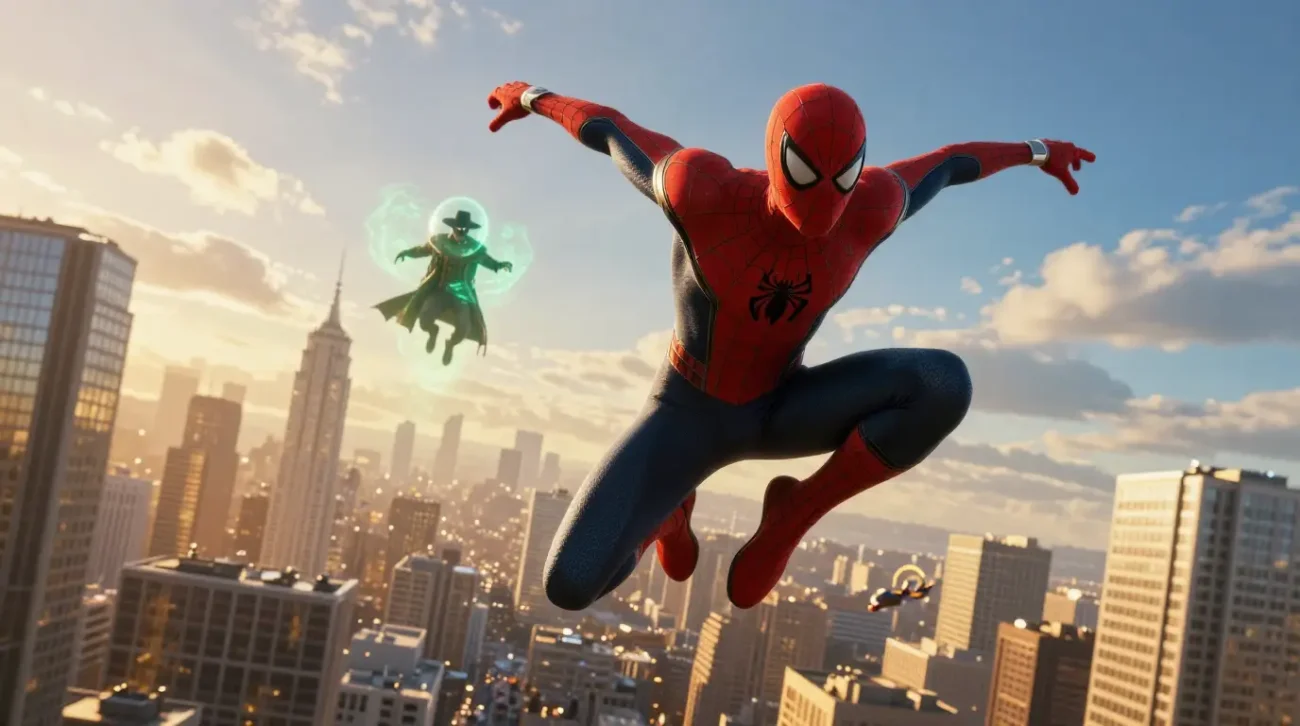
Spider-Man has appeared in over 60 video games beginning with the 1982 Atari 2600 title. The franchise reached its creative peak with Insomniac Games’ PlayStation universe, which redefined what superhero gaming could deliver and produced some of the most commercially significant civilian jacket pieces in the entire collection.
Marvel’s Spider-Man PS4 (2018)
Marvel’s Spider-Man (2018), developed by Insomniac Games exclusively for PlayStation 4, is widely regarded as the finest Spider-Man game ever made. Yuri Lowenthal voices Peter Parker in a version of Manhattan where Parker is already an experienced hero. According to the PlayStation Blog, the game sold over 20 million copies and became one of the fastest-selling PlayStation exclusives of all time. Marvel’s Spider-Man 2 (2023) is a PS5 exclusive featuring both Peter Parker and Miles Morales as playable characters with the Venom symbiote storyline as its central narrative.
Marvel’s Spider-Man: Miles Morales PS5 (2020)
Marvel’s Spider-Man: Miles Morales (2020) is a standalone title released alongside the PS5 launch. Nadji Jeter voices Miles Morales in a story set during winter in Harlem, introducing Gloria Davila and the F.E.A.S.T. organisation as central supporting characters. The game sold over 6.5 million copies. Two of the most popular pieces in the TV Jackets collection come directly from this game: the Gloria Davila F.E.A.S.T. green jacket and the Miles Morales hoodie and zip hoodie from his civilian wardrobe.
Shop Gloria Davila F.E.A.S.T. Green Jacket
Shop Miles Morales Hoodie
Shop Miles Morales Black Zip Hoodie
Marvel Rivals: Peter Parker Photographer Jacket (2024-2025)
Marvel Rivals, launched in December 2024 as a hero shooter from NetEase Games, introduced Spider-Man as a playable character. Season 7.5 added the Peter Parker Photographer skin a legendary cosmetic that became a cultural moment across gaming communities worldwide and one of the most talked-about Spider-Man costume releases of 2025. TV Jackets offers the Peter Parker Photographer jacket as a real-world made-to-order piece, translating the gaming skin into everyday wearable outerwear for the first time.
Shop Peter Parker Photographer Marvel Rivals Jacket
The Supreme Vanson Spider-Man Jacket
The Supreme x Vanson Spider-Man leather jacket is the most-searched collector piece in the entire spiderman leather jacket category globally. Originally produced as a limited collaboration between Supreme and Vanson Leathers one of the most respected leather jacket manufacturers in the United States the Supreme x Vanson Spider-Man jacket became one of the most recognisable Spider-Man leather jacket designs in existence. The supreme spiderman jacket cluster generates over 4,000 combined monthly searches across its variants, making it the single highest-volume commercial sub-cluster in this entire niche.
Because original retail versions of the Supreme Vanson Spider-Man jacket are extremely scarce at original pricing, TV Jackets offers it as a made-to-order build for buyers who want this specific construction without paying secondary market premiums. Every detail the leather grade, the stitching construction, the Spider-Man graphic execution is built to order through the TV Jackets custom jacket builder.
Build the Supreme Vanson Spider-Man Jacket to Order
Spider-Man Streetwear and Brand Collaborations
The streetwear and brand collaboration dimension of Spider-Man jacket culture extends beyond the films and games into hip-hop culture, denim, and collector-tier brand partnerships.
King Spider Young Thug Black Denim Jacket
The King Spider Young Thug Black Denim Jacket represents hip-hop culture’s intersection with Spider-Man iconography crystalline spider web embroidery in streetwear denim form. It is the spider man denim jacket and spiderman jacket y2k piece in the collection, bringing spider web embroidery into a genuine streetwear denim construction for the buyer who wants Spider-Man iconography in everyday streetwear rather than a screen-accurate film jacket.
Shop King Spider Young Thug Denim Jacket
Spider-Man Motorcycle Red Leather Jacket
The Spider-Man Motorcycle Red Leather Jacket is the spiderman leather jacket in classic biker silhouette red and black colorway delivering the red and blue suit energy in a genuine daily-wear leather jacket construction. It is one of the cleanest spider man leather jacket executions in the collection for the buyer who wants a leather jacket that reads as Spider-Man without being a direct film or game replica.
Shop Spider-Man Motorcycle Red Leather Jacket
Spider-Man Suits and Outfits Through the Decades
The Spider-Man universe has produced more recognisable suit and outfit designs than any other superhero franchise. The classic red and blue suit the original Ditko design from 1962 features the web pattern, large eye lenses, and spider emblem that every subsequent live-action version has updated. The black symbiote suit, introduced in Secret Wars (1984), led directly to the creation of Venom in Amazing Spider-Man issue 300 (1988). The Iron Spider suit is the most technologically advanced suit in the MCU timeline. The No Way Home integrated suit Peter’s self-designed white construction represents his independence from Tony Stark’s technology.
Miles Morales’s black and red suit design is entirely distinct from Peter Parker’s visual language angular spider emblem, bio-electric venom strike energy patterns, and a black and red colour scheme that has generated some of the most popular pieces in the TV Jackets collection. The Spider-Punk suit, worn by Hobie Brown in Across the Spider-Verse, is the most visually distinctive Spider-Man design ever put on screen a studded denim vest with Union Jack elements built around an anarchist punk aesthetic.
Every Actor Who Has Played Spider-Man
Three actors have played Peter Parker in major theatrical live-action films. Tobey Maguire played the role in Sam Raimi’s trilogy from 2002 to 2007, bringing an earnest performance that established the template for superhero cinema. Andrew Garfield played the character in the Amazing Spider-Man films from 2012 to 2014 and returned in No Way Home in 2021. Tom Holland has played the MCU version of Peter Parker since Captain America: Civil War in 2016, balancing teenage awkwardness with growing heroism across eight appearances to date.
In voice acting, Yuri Lowenthal voices Peter Parker in the Insomniac Games trilogy from 2018 to 2023. Nadji Jeter voices Miles Morales across the same universe. Shameik Moore voices Miles Morales in the Spider-Verse animated films beginning with Into the Spider-Verse in 2018. Oscar Isaac voices Miguel O’Hara in Across the Spider-Verse. Hailee Steinfeld voices Gwen Stacy. Daniel Kaluuya voices Hobie Brown as Spider-Punk. Christopher Daniel Barnes voiced Peter Parker in the celebrated animated series from 1994 to 1998.
For the most comprehensive range of screen-inspired Spider-Man outerwear across every film era, animated universe, and gaming platform, explore the Spiderman Jackets collection at TV Jackets. For the full breadth of character-inspired outerwear, browse the Movie Outfits Collection at TV Jackets. Every piece is screen-inspired, made to order, available in custom sizing, and ships worldwide.
